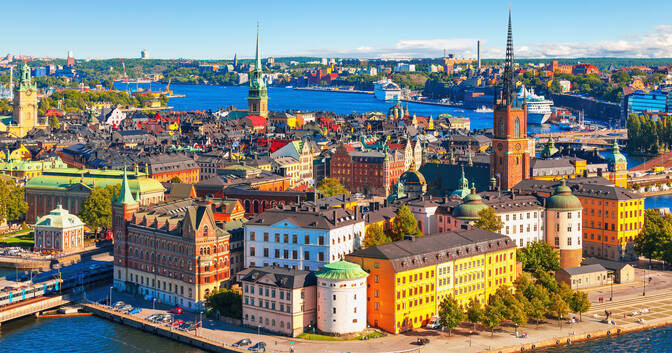
Scandinavia—often related to social security, potent welfare methods, and cultural cohesion—has undergone important demographic and cultural shifts in the last several many years. Immigration has released new languages, religions, and social dynamics, prompting ongoing debates about integration, id, and the way forward for the Nordic product.
From Homogeneity to Range
For A lot from the twentieth century, Scandinavian societies had been characterized by a large degree of cultural, linguistic, and institutional homogeneity. Countries like Norway, Sweden, and Denmark shared relatively uniform populations, shaped by typical histories, robust national identities, and carefully aligned social norms. This cohesion played a foundational part in the development in the Nordic welfare design, which relies on large levels of have confidence in, collective accountability, and wide community help for redistribution.
This demographic balance began to shift in the postwar period, initially as a result of labor migration. Throughout the nineteen sixties and 1970s, workers from Southern Europe, Turkey, and areas of Asia ended up recruited to aid escalating industrial economies. Although many were envisioned to return dwelling, a big range settled permanently, bringing family members and setting up communities.
In the late twentieth century onward, the pace and mother nature of immigration transformed. Refugee movements from conflict regions—such as the Balkans, the center East, and areas of Africa—introduced new Proportions of range. Simultaneously, globalization and European integration elevated mobility within and beyond the location, even more diversifying populations.
Urban facilities grew to become the focal points of this transformation. Towns including Oslo, Stockholm, and Copenhagen produced into multicultural environments the place several languages, religions, and cultural methods coexist. Neighborhoods which were after comparatively uniform now reflect a wide array of backgrounds, reshaping each day interactions in educational institutions, workplaces, and community Areas.
This changeover has had both structural and symbolic implications. With a structural stage, institutions designed for rather homogeneous populations have needed to adapt to new social realities. Training methods, labor marketplaces, and community solutions increasingly tackle linguistic diversity, diversified cultural expectations, and differing socioeconomic commencing details.
Symbolically, the change difficulties lengthy-standing narratives of countrywide identity. The thought of a shared cultural baseline is not self-obvious, prompting ongoing conversations about belonging, integration, and the definition of “countrywide” lifestyle.
The transfer from homogeneity to range has not been linear or uniformly knowledgeable. Results range across areas, communities, and generations. Nonetheless, the general trajectory is obvious: Scandinavian societies are not described by uniformity, but by an evolving mixture of identities that proceed to reshape their social and cultural landscapes.
The mixing Model Stressed
Scandinavian integration models have usually been created on universalism: equivalent entry to welfare, instruction, healthcare, and labor markets as the key mechanism for incorporating newcomers. The underlying assumption is always that potent institutions, coupled with high-top quality community solutions, will lessen inequality and help immigrants to become economically and socially integrated after some time.
In practice, nonetheless, this product has faced increasing pressure. Just one central challenge is labor market place integration. Scandinavian economies are remarkably controlled, with powerful unions, substantial wage flooring, and an emphasis on official skills. When these features shield workers, they also develop obstacles to entry for newcomers who may possibly absence identified credentials, area language proficiency, or professional networks. Because of this, work gaps involving indigenous-born populations and immigrants persist in several spots.
Instruction units facial area parallel pressures. Colleges are expected to combine students from diverse linguistic and cultural backgrounds whilst sustaining large educational specifications. In neighborhoods with concentrated immigrant populations, disparities in educational outcomes can arise, reinforcing lengthy-term inequalities. These styles complicate the intention of equivalent prospect that underpins the welfare design.
Residential segregation adds another layer of complexity. In major city parts, specified districts have grown to be related to higher concentrations of immigrant populations. Though these communities can offer social guidance and cultural continuity, they could also limit interaction with broader society if financial and social mobility is constrained. This spatial dimension helps make integration not just a plan situation, but a geographic a single.
In response, governments have altered their ways. Policies significantly emphasize language acquisition, employment incentives, and civic participation. Some countries have launched stricter specifications for residency or citizenship, linking them to integration benchmarks. Many others have tightened immigration controls to handle the dimensions and tempo of arrivals.
These shifts replicate a broader stress: maintaining inclusive welfare programs whilst making sure their extended-time period sustainability. The Nordic design depends on common participation and believe in in establishments. When integration results drop shorter, political strain grows to recalibrate insurance policies.
The result is often a model in transition. The concepts of universalism stay, Nonetheless they are being reinterpreted in response to new demographic realities. Integration is now not assumed to adhere to mechanically from usage of companies; it is more and more dealt with as being a structured, conditional approach demanding active participation from the two persons and establishments.
Identity and Community Discussion
Immigration has shifted thoughts of national identification in Scandinavia from implicit assumptions to express general public debate. Societies that after relied over a largely shared cultural framework now confront the undertaking of defining belonging in additional pluralistic terms. This has created identification not simply a cultural difficulty, but a political and institutional one.
Public discourse progressively facilities on values rather than ethnicity alone. Concepts including gender equality, secularism, flexibility of expression, and rely on in general public establishments are often framed as core elements of Scandinavian identity. The debate is significantly less about no matter if range exists and more details on how considerably it may possibly increase without altering these foundational norms. This reframing reflects an attempt to define identity in civic instead of purely cultural terms, even though the boundary amongst the two is usually contested.
Political responses differ across nations. In Denmark, debates have tended to emphasize cultural cohesion and also the dangers of parallel societies, leading to much more restrictive integration and immigration guidelines. Sweden has historically promoted multiculturalism and openness, although increasing issues about crime, segregation, and social fragmentation have shifted parts of The talk towards stricter steps. Norway typically occupies a middle ground, combining fairly open up insurance policies with gradual tightening and an emphasis on integration results.
Media coverage and public narratives Engage in a substantial part in shaping perception. Higher-profile incidents—whether or not linked to crime, social unrest, or integration challenges—can amplify fears and affect coverage direction. Concurrently, accomplishment stories of integration, entrepreneurship, and cultural contribution acquire comparatively a lot less focus, making an imbalance in how immigration is perceived.
The talk also displays generational and geographic variations. City regions, exactly where range is much more noticeable and normalized, often solution identification much more flexibly. Rural locations, with significantly less immediate exposure to immigration, may watch adjustments more cautiously. Youthful generations, expanding up in additional various environments, are likely to adopt broader definitions of belonging.
Finally, identity in Scandinavia is no more a fixed thought but an evolving negotiation. Immigration has created visible the underlying values that determine these societies, forcing them to articulate what was after taken for granted. The end result remains open up, formed by ongoing dialogue among custom, policy, and lived working experience.
Urban Realities and Day-to-day Integration
Integration in Scandinavia is most tangible in the city amount, in which insurance policies meet lifestyle. Towns including Oslo, Stockholm, and Copenhagen purpose as Main web-sites of conversation in between newcomers and recognized populations, making them central to how integration succeeds or fails in apply.
Employment is usually a important determinant. Entry to the labor current market not only gives cash flow but will also facilitates language acquisition, social networks, and a sense of belonging. Even so, entry limitations—which include credential recognition, language requirements, and restricted Specialist networks—can hold off participation. When work is unevenly dispersed, it reinforces broader styles of inequality which have been visible in particular neighborhoods.
Training plays an equally essential purpose. Educational facilities work as early integration environments where kids from various backgrounds interact and adapt to shared norms. In effectively-resourced places, This may foster cohesion and upward mobility. In more segregated districts, nonetheless, educational institutions may possibly experience concentrated issues, which include language gaps and different amounts of prior schooling, which might have an effect on extended-phrase outcomes.
Housing styles even further form integration. In lots of Scandinavian cities, immigrant populations are disproportionately concentrated in certain city districts. These parts generally present affordability and Local community help but also can limit publicity to wider society if mobility is limited. After some time, these kinds of spatial concentration can lead to parallel social buildings, the place interaction throughout teams turns into much less Recurrent.
Community institutions—transportation, Health care, community facilities—serve as daily Call factors. Their accessibility and high quality impact how persons navigate the city and have interaction with broader Culture. Successful establishments can lower friction and advertise inclusion; strained or uneven providers can deepen divides.
Social conversation outdoors official programs is equally significant. Workplaces, public Areas, and civic companies create prospects for informal Call, that's important for constructing trust. Devoid of these interactions, integration hazards remaining administrative rather then social.
Urban realities spotlight that integration is not one policy final result but a cumulative process shaped by many elements. It will depend on how people Dwell, do the job, research, and shift within the metropolis. Results is consequently uneven and context-dependent, reflecting the complexity of translating nationwide insurance policies into daily practical experience.
An Id Nonetheless in Formation
Scandinavia’s evolving identification is not really shifting toward a set endpoint but unfolding being an ongoing process shaped by demographic modify, plan adaptation, and day to day encounter. Immigration has launched new cultural levels into societies the moment described by relative uniformity, making identity considerably less static plus more negotiated.
1 essential change is the movement from implicit to explicit definitions of belonging. Formerly, shared norms and cultural references essential very little articulation. Now, these same components are progressively debated, formalized, and often contested. Identification is staying reframed with regard to values—which include equality, trust, and social obligation—instead of purely heritage or origin. Nevertheless, translating these abstract ideas into inclusive, sensible frameworks remains complicated.
Generational alter plays a significant role. Young populations, significantly in city parts, typically increase up in varied environments in which numerous identities coexist. For them, hybridity is normalized instead of exceptional. This contrasts with more mature frameworks that emphasised cultural continuity and cohesion. After a while, these generational discrepancies are more likely to reshape how national id is recognized and expressed.
Institutionally, the problem lies in adapting methods built for homogeneity to extra assorted populations with no weakening their Travel Blog core capabilities. Welfare styles, schooling methods, and labor marketplaces have to stay effective when accommodating different linguistic, cultural, and socioeconomic backgrounds. This demands continual adjustment as an alternative to a single-time reform.
There is also an exterior dimension. Scandinavia’s international graphic—as open, egalitarian, and secure—interacts with inner debates about integration and id. Guidelines and general public discourse are motivated not only by domestic problems but additionally by how these societies posture on their own internationally.
Importantly, id formation is not really exclusively pushed by policy. It can be shaped by every day interactions—how persons function jointly, share spaces, and negotiate variances in practice. These micro-stage dynamics gradually affect broader societal narratives.
The end result is definitely an identification that may be neither completely cohesive nor fragmented, but in changeover. It incorporates elements of continuity along with rising varieties of diversity. As an alternative to changing 1 design with A further, Scandinavia is layering new realities onto current buildings.
In this feeling, id is not really getting missing but redefined. It has become much more intricate, extra express, and much more adaptive—reflecting the realities of societies which might be no more uniform, but nonetheless seek cohesion in modifying problems.
Closing Views
Scandinavia’s experience with immigration and integration reflects a broader transformation from stable homogeneity to managed diversity. The area’s power has prolonged rested on rely on, potent establishments, and shared norms, but these foundations at the moment are being tested and reinterpreted. Integration is no longer assumed to adhere to instantly from entry to welfare programs; it calls for Energetic participation, coverage adaptation, and sustained social interaction.
What emerges just isn't a breakdown of identification, but a more sophisticated Edition of it. Scandinavian societies are redefining belonging in ways that balance continuity with alter, tradition with inclusion. Outcomes remain uneven, and debates normally replicate serious tensions concerning openness and cohesion.
Nonetheless the procedure by itself is important. As opposed to remaining static, these societies are actively negotiating their potential shape. Immigration has made id additional seen, far more debated, and eventually a lot more dynamic—turning it into some thing continuously fashioned rather then Traditionally set.